10 James Bond Movies That Broke The Franchise's Biggest Rules, Including No Time To Die
James Bond is supposed to save the world, seduce a beautiful woman, and walk away without so much as a scratch on his tuxedo. For more than 60 years, the world's most famous secret agent has followed a remarkably reliable formula. Of course, the most interesting things tend to happen when 007 abandons it entirely.
Sean Connery established many of the conventions that audiences came to expect from a Bond movie, including extravagant gadgets, impossible escapes, and spectacular confrontations with megalomaniacal villains. His successors generally maintained those traditions, even as the franchise adjusted to changing attitudes and increasingly ambitious action movies.
However, some of the most memorable James Bond movies are the ones that dared to challenge expectations. George Lazenby's Bond actually got married, Roger Moore took the franchise into outer space, and Timothy Dalton abandoned his official duties to pursue a personal vendetta. Those developments would once have seemed almost unthinkable for a character defined by his independence.
Daniel Craig's tenure introduced even more dramatic changes. Beginning with Casino Royale in 2006, his interpretation explored Bond's emotional vulnerabilities and the consequences of his dangerous profession. By the time Craig's five-film journey reached its conclusion, the franchise had challenged nearly every assumption audiences previously held about 007.
These 10 James Bond movies broke some of the franchise's longest-standing conventions, occasionally with controversial results. While not every experiment improved upon the familiar formula, several fundamentally changed what audiences could expect from the British secret agent.
On Her Majesty's Secret Service (1969)—James Bond Gets Married
James Bond had enjoyed countless romantic encounters before On Her Majesty's Secret Service, but the idea of him settling down with one woman seemed completely contrary to his character. George Lazenby's sole appearance as 007 changed that when Bond fell genuinely in love with Tracy di Vicenzo (Diana Rigg). Their relationship develops throughout his investigation into Ernst Stavro Blofeld, eventually leading to a wedding.
Unfortunately, the marriage ends almost immediately when Blofeld's henchwoman Irma Bunt murders Tracy during the newlyweds' departure for their honeymoon. The devastating scene established that Bond could suffer personal losses he couldn't simply shrug off. Tracy remained the only woman James Bond ever married, and her death became one of the franchise's most enduring tragedies.
Moonraker (1979)—James Bond Goes Into Outer Space

By 1979, James Bond had traveled across the globe, explored underwater hideouts, and confronted countless elaborate schemes. Moonraker decided that Earth was no longer a big enough playground. Roger Moore's fourth appearance as 007 sends Bond into orbit to confront industrialist Hugo Drax (Michael Lonsdale), whose plan involves exterminating humanity and repopulating the planet with genetically selected survivors.
The film's climax unfolds aboard a space station, complete with futuristic weapons and a spectacular laser battle between opposing forces. Released following the enormous success of Star Wars, Moonraker embraced science fiction more enthusiastically than any previous Bond adventure. Although its decision to send Bond into space remains divisive, the movie demonstrated just how far the franchise was willing to stretch its identity to attract audiences.
Licence To Kill (1989)—Bond Abandons MI6 For Revenge

James Bond has occasionally disregarded orders, but Licence to Kill takes his rebellious streak considerably further. After drug lord Franz Sanchez (Robert Davi) brutally attacks CIA agent Felix Leiter (David Hedison) and murders his new bride, Bond becomes obsessed with revenge. His determination to pursue Sanchez directly conflicts with his responsibilities to British intelligence, prompting M to intervene.
Rather than abandon his vendetta, Timothy Dalton's Bond resigns when M moves to revoke his licence to kill. The resulting adventure replaces the usual world-threatening conspiracy with a brutal, deeply personal revenge story. The unusually dark tone makes Licence to Kill one of Dalton's most distinctive Bond movies. For once, 007's primary motivation has nothing to do with serving his country.
GoldenEye (1995)—Bond Finally Answers To A Female M

For more than three decades, James Bond's superior at MI6 was portrayed by male actors, reinforcing the old-fashioned hierarchy surrounding the British Secret Service. GoldenEye changed that tradition by introducing Judi Dench as M, replacing Robert Brown and presenting Pierce Brosnan's Bond with a boss who has little patience for his outdated attitudes.
During their first memorable confrontation, M bluntly describes Bond as a sexist, misogynistic dinosaur and questions his judgment. The exchange establishes that 007 can no longer rely upon the unquestioning approval of his superiors. Dench's introduction became one of GoldenEye's most significant departures from earlier Bond movies, establishing a more confrontational relationship between Bond and the intelligence service he represents.
The World Is Not Enough (1999)—The Bond Girl Is Actually The Villain

James Bond's romantic interests have frequently turned out to be working for his enemies, but The World Is Not Enough takes that familiar deception much further. Pierce Brosnan's 007 is assigned to protect wealthy oil heiress Elektra King (Sophie Marceau), whose father has been murdered. Their developing relationship initially follows the familiar pattern of Bond falling for a woman endangered by a powerful criminal.
The revelation that Elektra engineered her father's death and is working with terrorist Renard (Robert Carlyle) completely overturns that expectation. Rather than simply serving as the villain's accomplice, she emerges as a central architect of the scheme. Making a traditional Bond girl the main antagonist was an unusually bold choice, culminating in Bond personally killing a woman he genuinely cared about.
Die Another Day (2002)—Bond Is Captured And Loses His 00 Status

James Bond has survived countless impossible situations, but Die Another Day begins by denying him the swift escape audiences usually expect. After his mission in North Korea goes disastrously wrong, Pierce Brosnan's Bond is captured and subjected to 14 months of imprisonment and torture. He is eventually exchanged for another prisoner, although his return to Britain proves far from triumphant.
M suspects that Bond may have compromised intelligence during his captivity, resulting in his 00 status being revoked. Suddenly, the supposedly indispensable secret agent finds himself treated as a security risk by his own organization. Although Die Another Day eventually returns to increasingly outrageous gadgets and action sequences, its opening introduced one of the darkest situations Bond had ever faced.
Casino Royale (2006)—Bond Starts Over Without The Familiar Formula

After four Pierce Brosnan movies, Casino Royale abandoned nearly everything audiences had come to associate with the established version of James Bond. Daniel Craig's debut begins before Bond has fully established himself as 007, depicting the killings that earn him his 00 status. The familiar Q and Miss Moneypenny are absent, elaborate gadgets are largely discarded, and Bond's physical confrontations become considerably more brutal.
Rather than presenting another effortlessly confident secret agent, Casino Royale introduces a reckless, emotionally vulnerable Bond who makes serious mistakes. His relationship with Vesper Lynd (Eva Green) also leaves him devastated instead of celebrating another romantic conquest. The decision to revisit Bond's origins revitalized the franchise, proving that even its most recognizable traditions weren't essential to its success.
Quantum Of Solace (2008)—Bond Gets His First Direct Sequel

For decades, James Bond movies largely functioned as self-contained adventures. Although familiar enemies and characters occasionally returned, audiences could generally watch a new installment without knowing precisely what happened in the previous one. Quantum of Solace broke that tradition by beginning almost immediately after the events of Casino Royale, continuing Bond's investigation into the organization connected to Vesper Lynd's betrayal.
The film became the first direct sequel in the official Bond series, replacing the usual fresh assignment with the continuation of an unresolved personal story. Craig's Bond is still struggling with Vesper's death, making his emotional state central to the investigation. Although Quantum of Solace received mixed reactions, its serialized approach helped establish the continuity that would define the remainder of Craig's tenure.
Skyfall (2012)—Bond Fails To Save M

James Bond has spent decades protecting important figures, rescuing hostages, and preventing villains from completing their elaborate schemes. Skyfall turns that expectation against him when former MI6 agent Raoul Silva (Javier Bardem) sets out to murder M (Judi Dench). Bond attempts to protect his superior by taking her to his childhood home in Scotland, where they prepare for Silva's inevitable assault.
Although Bond ultimately kills Silva, he fails to save M, who dies from injuries sustained during the confrontation. Her death delivers an unusually decisive victory to a Bond villain, since Silva achieves his primary objective despite being killed himself. The decision to kill off Judi Dench's M brought an emotional finality rarely seen in earlier installments, permanently changing the relationship between 007 and the institution he serves.
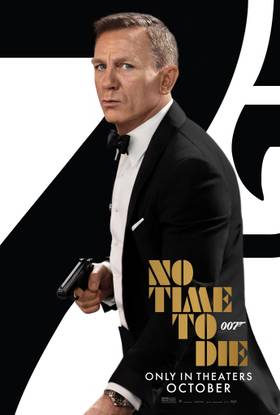
No Time To Die (2021)—James Bond Becomes A Father And Actually Dies

For nearly 60 years, James Bond's survival was the one franchise convention audiences could reasonably take for granted. No matter how dangerous the mission, 007 would eventually escape, defeat his enemies, and return for another adventure. No Time to Die dismantles that certainty while delivering two extraordinary revelations about Daniel Craig's version of the character.
Bond discovers that he has a daughter, Mathilde, with Madeleine Swann (Léa Seydoux), giving him a future worth protecting. Unfortunately, his final confrontation with Lyutsifer Safin (Rami Malek) leaves him infected with nanobots designed to kill Madeleine and Mathilde if he comes into contact with them. Rather than risk their lives, Bond remains on the island as missiles destroy the facility. His death, explored through the film's devastating final revelations, broke the franchise's most fundamental rule: James Bond was no longer guaranteed to survive.
- TV Show(s)
-
Fleming: The Man Who Would be Bond
- Video Game(s)
-
GoldenEye 007, The World Is Not Enough, 007: Nightfire, James Bond 007: Everything or Nothing, Quantum of Solace, James Bond 007: From Russia with Love, James Bond 007: Blood Stone, GoldenEye 007 Remake, 007: Agent Under Fire
- First TV Show
-
Fleming: The Man Who Would be Bond