8 Perfect Isekai Anime Classics No One Talks About Today
While it might have been within the past decade that isekai anime became a global phenomenon, the genre has existed for far longer than that; even in the 90s and 2000s, there was always an appeal to stories about characters being sent to other worlds because of their potential for escapism and fun fantasy action, and if one were to go back even further, the popularity of stories like Alice in Wonderland and The Wizard of Oz means that isekai has been a thing for well over a century.
For better or worse, isekai is one of the most enduring genres in not just anime but fiction as a whole, and with that level of longevity, there are plenty of stories that have made a name for themselves as definitive classics of the genre. However, while shows like Inuyasha, Digimon Adventure, and Aura Battler Dunbine are still held in high regard, many other classic isekai stories have all been forgotten, and with how great some of them were, that’s nothing but a shame.
Monster Rancher
While Pokémon and Digimon dominated monster-battling anime in the 90s, an oft-forgotten third contender was TMS Entertainment’s Monster Rancher. While the original Monster Rancher games tended to be light on story, the anime came up with an original narrative filled with fun action and an engaging cast of heroes and villains, and even someone who never played the games could get a lot out of it.
Monster Rancher never had the same sort of polish that made Pokémon and Digimon so popular, which is likely why it faded into obscurity by comparison, but the anime is still a fun action romp anyone can enjoy, and it more than earns its place as an iconic 90s anime, even if so few people remember it.
El-Hazard
When it comes to forgotten 90s anime, few shows better fit the description than AIC’s El-Hazard. Despite how well it uses high-concept sci-fi in tandem with a goofy, yet surprisingly deep narrative, El-Hazard and its various spinoffs and alternate continuities never truly became a big hit, especially when compared to Hiroki Hayashi’s true claim to fame, Tenchi Muyo.
While El-Hazard never truly took off, it’s still a fun anime for its gorgeous visuals, stellar direction, and fun characters and worldbuilding that mostly hold up by modern standards. In many ways, El-Hazard can be seen as having laid the groundwork for the isekai harem anime that overrun the medium, so for better or worse, it did leave its mark on the world.
Sonic X

Sonic the Hedgehog was once framed as taking place on an alien world, and that idea reached its peak with TMS Entertainment’s Sonic X. While Sonic X was mostly a retelling of some of the games with some original characters and stories, it’s still fun to see it all play out in animation, especially for the moments that differ from the games, like the expansion on Maria’s death and the iconic Dark Sonic scene.
Sonic X probably isn’t a perfect alternative to playing the games, but between how well it adapts them, how seamlessly original characters and narratives are blended into the plot, and the surprising amount of depth given to the Sonic cast, it’s still worth watching, even after so many years. The anime is a truly underrated part of the Sonic the Hedgehog franchise, but fortunately, that doesn’t make it any less fun to watch.
The Vision Of Escaflowne

Shoji Kawamori is famous for his work on Macross and Transformers, but a work of his that’s equally deserving of attention is Sunrise’s The Vision of Escaflowne. In a rarity for isekai anime, Escaflowne incorporates both sci-fi and fantasy elements into its story, and the result is an incredibly deep and action-packed narrative that does wonders to sell the romance of the two leads, Hitomi and Van.
Considering all the amazing 90s anime a person can watch, it makes sense for The Vision of Escaflowne to have gotten lost in the shuffle, but with how much of a visual and narrative marvel the series is, it still holds up amazingly well. To this day, The Vision of Escaflowne is one of the most unique anime to watch in and out of isekai, and anyone who hasn’t already watched it would be remiss to pass it up.
Tsubasa: Reservoir Chronicle

Japanese super group Clamp has one of the most extensive libraries in anime, and it all came together in Bee Train’s Tsubasa: Reservoir Chronicles. The series reworks Clamp’s entire library into a singular multiverse of sorts, and in doing so, it creates an incredibly enriching adventure story with amazing action and plot twists, and it still has all the same charm that’s commonly associated with them, as well.
As a love letter to their entire career, someone unfamiliar with Clamp’s work will miss much of the context for Tsubasa: Reservoir Chronicle, but even without all the references, it’s easy enough to follow the story. Doing so introduces someone to one of the most fun takes on an isekai story filled with plenty of action and romance, and 20 years later, it’s still an absolute gem of an anime.
Magic Knight Rayearth

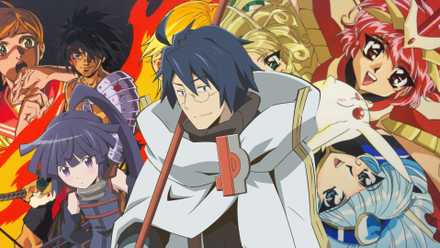
Tsubasa: Reservoir Chronicle proved that Clamp were the masters of isekai, but their first big foray into the genre was TMS Entertainment’s Magic Knight Rayearth. Unlike Tsubasa, Rayearth’s story is framed more around a traditional isekai narrative, but it stands out amazingly well for its blending of mecha and magical girl themes, all with an incredibly likable cast to tell the story with.
8 Near-Perfect Isekai Anime No One Talks About
As big as isekai anime have gotten, plenty of them are still prone to fall under the radar, even though a few of them are nothing short of perfection.
Clamp has always found success in every anime genre they’ve tackled, and with how much of an endearing classic Magic Knight Rayearth is, it’s clear that they’ve even mastered isekai. Rayearth’s age has caused it to fall off in relevancy, but with Magic Knight Rayearth’s reboot coming in October, there’s plenty of room for it to have a revival.
Fushigi Yugi

Isekai and harem anime often go hand in hand, and one of the forerunners of that idea is Studio Pierrot’s Fushigi Yugi. From start to finish, there’s plenty of fun to be had seeing Miaka deal with her growing harem of boys while working through her duties as a priestess, and fortunately, those lighthearted moments never overshadow the surprisingly dark fantasy story at play from day one.
With its inconsistent visuals and some repetitive storytelling, it makes sense that Fushigi Yugi would have fallen off in popularity, but even after 30 years, the series is easily one of the most well-developed and generally fun takes on the isekai genre around. Series creator Yuu Watase is a major name in the world of shojo anime, and it’s safe to say that Fushigi Yugi is nothing if not her magnum opus.
The Familiar Of Zero

When it comes to classic isekai stories, none is more important than J.C.Staff’s The Familiar of Zero. Not only is it one of the oldest and most popular examples of a story about a loser getting sent to a fantasy world and acquiring magic powers and a harem of girls, but the authors of more modern works like Re:Zero and Mushoku Tensei have all cited The Familiar of Zero as an influence on their work, so without it, it’s safe to say that the modern isekai wouldn’t exist.
The Familiar of Zero, essentially being the godfather of modern isekai, does mean it can come off as a tad cliché, but even then, the depth of its worldbuilding, combined with its fun action and the great chemistry of its cast, still make it a fun anime to watch from start to finish. In many ways, The Familiar of Zero is even better than the shows it inspired, and that easily makes it the best classic isekai anime no one talks about.

- Release Date
-
2006 – 2006-00-00
- Network
-
AT-X, Chiba TV
- Directors
-
Koji Kobayashi, Jiro Fujimoto, Yuta Maruyama, Tomio Yamauchi
-

-
-
Takahiro Sakurai
Guiche de Grammont
-