27 Years Later, Naruto's Next Anime Is Officially Switching Genres
In late 1999, Weekly Shonen Jump had little in the way of challengers to its biggest manga, One Piece. Recurring competitors on its table of contents frequently included the likes of Hikaru no Go, Yu-Gi-Oh!, Hunter x Hunter, and The Prince of Tennis. But upon the thrilling debut of Naruto, a true challenger would soon emerge in the form of a delightful ninja action-adventure series that'd become one of the magazine's quintessential battle shonen winners. 700 chapters and 250 million copies later, the formula worked so well that it sparked a sequel which, albeit less well-received, struck similar tones particularly near the end, with Boruto: Naruto Next Generations.
The anime adaptation, though, suffered particularly from added bloat in the form of even greater percentages of filler and an overall watered-down tone, showing an indecisiveness about whether to remain a stock battle shonen series or embrace its slice-of-life qualities. But, even as the anime wound down, the Boruto manga laid the blueprint for the confirmed next anime in the Naruto franchise to feel fresh and exciting once more.
Changing the final threat and Kaguya's clan in Naruto from deities to parasitic extraterrestrials, Boruto confirmed them to be the primary public enemies. What's even more twisted is, even as the original Boruto manga and anime saw the new generation help rise against the Otsutsuki, Naruto Uzumaki's own son, Boruto, would suddenly have his DNA altered to the point he could be considered one. Thus, with the grand twist coming up in the next Naruto franchise anime brainwashing the Hidden Leaf against their beloved Hokage's son, a postmodern nightmare will begin for Boruto, swapping slice-of-life and action-adventure themes for a battle shonen thriller.
Naruto's Next Anime Attaches Key Genre Evolution To Its Battle Shonen Roots
Warning: Spoilers Ahead for Boruto: Two Blue Vortex!
The original Boruto: Naruto Next Generations anime ended in 2023 just before the last truly interesting story of Part 1, the Omnipotence Arc, showed its most foundational changes to the Naruto franchise going forward. Kawaki believed Boruto to be a fundamental threat to the Hidden Leaf, bearing Otsutsuki traits, Karma, and Momoshiki's spirit, resorting to sealing away Naruto and Hinata in his Daikokuten to prevent them from interfering with his plan to kill their son. What's worse, Kawaki's main admirer, Eida, sought to help him while ultimately activating her ultimate shinjutsu, Omnipotence, swapping the public's perception of Boruto's identity and heritage with that of Kawaki.
This arc is the very next story to be adapted into the next anime for the Naruto franchise. Among other things, it establishes where Boruto got his scar seen in the timeskip, his suddenly Sasuke-style wardrobe and weaponry, and precisely why their conflict was so heated in the first episode of Boruto's anime. Instead of the more heroic story beats of Uzumaki's tale in Part 2, aka Naruto: Shippuden, the Omnipotence Arc brings Boruto into his fugitive arc. Wrongfully accused of having killed Naruto, Boruto is also no longer believed by the public to even be an Uzumaki. The next anime in the Naruto franchise will take on a survival-focused thriller angle as it adapts more of the Boruto manga.
Boruto's story is more like if Sasuke were chased out of Konoha, rather than leaving on his own accord
Instead of a tenacious young Naruto trying to bring a runaway Sasuke back while facing antagonists of scaling power and influence, Boruto's story is more like if Sasuke were chased out of Konoha, rather than leaving on his own accord. To sell this point further, Boruto's only primary ally during this blank three-year period leading into Two Blue Vortex is Sasuke himself, working as his chief mentor before being captured and consumed by Code's Claw Grimes. Every operation of Boruto's in upcoming anime projects will soon be calculated affairs, carefully recruiting trustworthy allies while fighting to free his village from the latest threat, pieces of the Ten-Tails that have become sentient, Human Divine Trees.
Naturally, the story will have all the action of a shonen anime bearing Naruto's DNA. Jura and the other Divine Trees have their abilities largely based on legacy Naruto and Boruto characters, with the new generation frequently awakening incredible Sharingan abilities or Shikamaru-level big-brain plays to shut down their opponents. But all throughout, Boruto is still officially on the run, each of his collaborations with interim Eighth Hokage Shikamaru Nara being a tightly-held secret. But beyond even just the initial twists set up by the Omnipotence shinjutsu, Boruto's manga has laid out how its anime future will infuse thriller elements with its more fantastical side.
Boruto's First Anime Ended Before The Story Became Truly Interesting
The Omnipotence Arc truly raised the stakes of Boruto's manga while still keeping its later clashes relatively subdued. As of chapter #34, the conflict with Code and the Divine Trees has rarely left the Hidden Leaf, apart from the various hideouts used by Boruto and Koji Kashin and the battle with the Divine Trees in the Land of Wind. Narrowing its focus allowed Boruto's struggle to feel more authentic as he gradually had to win over the trust of his former Konoha comrades, them often seeing him as the lesser of two evils compared to the Divine Tree threat.
Boruto: Two Blue Vortex has shown various sides of the Hidden Leaf's apparatus, including investigations into Shikamaru's cooperation with Boruto. It's shown legacy characters like Ino Yamanaka washing her hands of Shikamaru's secret dealings, while her husband, Sai, was pulled into cooperation upon learning their son, Inojin, was the linchpin of the Mamushi Arc's operation.
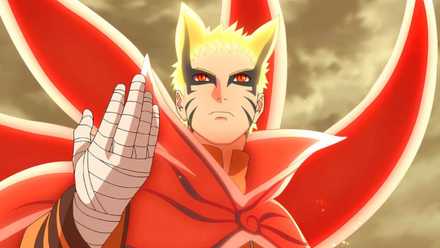
All of Naruto's Transformations Ranked Weakest to Strongest
Naruto started his franchise out as a relatively weak character before becoming one of the strongest in it: here are all of his forms, ranked.
What's even more interesting is that the Naruto franchise's next anime will have the opportunity to show a wildly complicated multiversal angle to its plot with Koji Kashin's Prescience, unveiling a "battle royale between destinies." Instead of being able to catch glimpses of the future at will, Koji's Prescience was similar to Isaac Mendez from Heroes in that he'd experience it involuntarily, with each glimpse merely giving the known futures. As Koji learns, telling others of his visions leads them to change their actions, creating dangerous, unpredictable possibilities, meaning his glimpses should be seen as intel on possible variables on any given mission.
Finally, as Boruto soon learns, the Thorn Soul Bulbs, obtained from defeating the Divine Trees and essential to save those they've trapped, can die if exposed for too long, extinguishing those characters' souls with them. While this is already harrowing enough, considering that Hidari is the only known remaining Divine Tree bearing a Thorn Soul instrumental to freeing Sasuke, fans will soon see that Boruto witnesses the consequences of standing by for too long. Despite retrieving Bug's ticket to freedom after Mamushi's defeat, Code held off Boruto long enough for Bug to die before being released in time. But in seeing Bug's death, Boruto encapsulates how its hero has changed.
Boruto Uzumaki Will Be A Whole Different Protagonist In His Next Anime
While initial complaints placed Boruto as a spoiled, rebellious brat scion of the Seventh Hokage, even the first Boruto manga and anime showed his reasonable growth. He gained perspective on Scientific Ninja Tools despite resenting how his use of them disqualified him from the Chunin Exams, after seeing how they could benefit society rather than being used cheaply to bypass training as a shinobi. Boruto even gained some much-needed insight into the heavy burden Naruto faces as Hokage, even if that occasionally means shifting priorities as a father.
But by the time of the Omnipotence Arc and Boruto: Two Blue Vortex, its star is sent on the run from his home, his father is being held captive by Kawaki, and the key to saving his mentor's life is a rotting token from a Divine Tree corpse. Boruto Uzumaki has already undergone immense training under Sasuke's guidance, learning all he could know before Part 2's first chapter began. He's overwhelmingly competent, stoic, and almost blithely accepting of the deaths of those not deemed by Koji to be worth mourning, like the case of Bug. Boruto is, at this point, closer to resembling Sasuke in temperament and wardrobe than his own father.
Frankly, this change was necessary. For the Boruto series to adopt a thriller angle between its high-stakes battles, its primary character has to be accordingly hardened in the face of godly adversaries and his own home being turned against him. Living a postmodern nightmare where the villagers of the Hidden Leaf save for a select few are brainwashed to reject the truth in favor of a fabricated narrative, Boruto must, understandably, be a bit more cold and moody than other contemporary shonen protagonists. Yet, Boruto retains his light moments, casually joking that he's let go of his initial threat to shave Inojin's head after the key victory against Mamushi.
It's light moments like these, including Boruto's perpetually oblivious reception to Sarada and Sumire's affections, that remind viewers and readers that, underneath all of his suffering, he's still Boruto. While he's now a fugitive seen by a post-truth Konoha as a traitor, with allies like Sarada looked down upon for sympathizing with him, the next Naruto anime won't be a full-blown thriller like Monster or Pluto, that goes without saying. But much like the evolution of JoJo's Bizarre Adventure, the addition of thriller elements have worked surprisingly well for Boruto: Two Blue Vortex, injecting something bold and exciting into Naruto's anime future, instead of trying, and failing, to emulate its greatest hits.
-
- First Film
-
Naruto the Movie: Ninja Clash in the Land of Snow
- Latest Film
-
Boruto: Naruto the Movie
- First TV Show
-
Naruto
- Latest TV Show
-
Boruto: Naruto Next Generations
- First Episode Air Date
-
October 3, 2002
- Cast
-
Junko Takeuchi, Maile Flanagan, Noriaki Sugiyama, Chie Nakamura, Kazuhiko Inoue, Nana Mizuki, Hideo Ishikawa, Yûko Sanpei
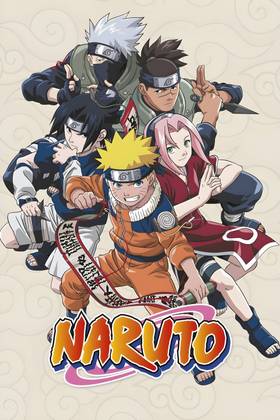
Naruto is a franchise spawned from the manga series penned by Masashi Kishimoto that began in 1999. Generating several tv series, games, movies, and more, Naruto follows the exploits of a young outcast ninja harboring the spirit of a demon fox who seeks to become the Hokage, the leader of his ninja village, to break the stigma against him. Upon the conclusion of the initial series, Naruto expanded into Boruto, following many series protagonists' children and returning faces.
-
- Writer
-
Masashi Kishimoto
- Writers
-
Masashi Kishimoto
- Penciler(s)
-
Mikio Ikemoto
- Inker(s)
-
Mikio Ikemoto
- Colorist(s)
-
Mikio Ikemoto
- Publisher(s)
-
Viz Media
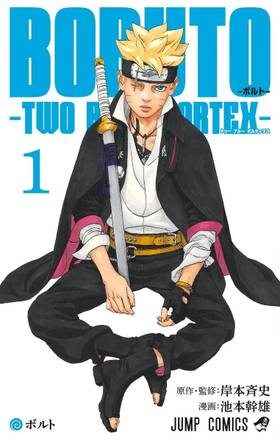
Years after fleeing his village with Sasuke, Boruto returns to confront the dark changes that have occurred. With memories altered and Kawaki now seen as the hero, Boruto faces a world where he is the outcast. The two rivals must settle their differences as their Otsutsuki powers grow more dangerous.